
Pneumatic rubber fender is a critical marine protective device for ship to berth and ship to ship operations. Model WF1020, dimension Φ1000 mm × 2000 mm, is equipped with heavy-duty truck-tyre protective sleeve and complete galvanized chain tyre assembly, delivering outstanding energy absorbing performance and anti-abrasion capability.
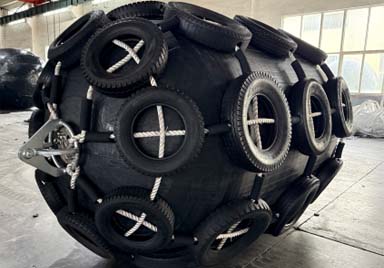
· Ship-to-berth docking: Small-medium cargo vessels, barges, work boats, fishing vessels, patrol boats at general cargo terminals, fishing ports, inland river wharves, private berths and yacht docks.
· Ship-to-ship transfer: Light-medium load ship-to-ship bunkering and cargo transfer operations in sheltered water areas.
· Special-purpose usage: Floating dock, temporary mooring point, offshore auxiliary berthing protection.
Note: Not recommended for large-size bulk carriers or heavy-impact open-sea exposed terminals without extra reinforcement.
1. Accessory check before installation Confirm complete set: main rubber fender body, truck-tyre protective sleeves, galvanized swing chains, shackles, lifting rings, air valve. Check rubber surface without cuts, tears or hidden damage; ensure all metal fittings are intact.
2. Inflation before mounting Inflate the fender to the standard working pressure (refer to product technical datasheet). Do NOT install fully deflated fender. Keep pressure within allowable range; over-inflation is strictly forbidden.
3. Hanging & fixing method Use four-point suspension via galvanized chains and shackles. Connect lifting rings of the fender to the wharf bollard / ship side fixing base. Keep the fender floating freely, do not pull it overly tight.
4. Position adjustment Adjust suspension height so that the main contact area of the fender aligns with ship hull contact zone under normal tide range. Avoid sharp corners, weld seams directly rubbing against rubber body.
5. Pre-operation inspection After installation, double-check chain tension, shackle pin locking, air pressure value before berthing operation.
1. Vessels shall approach the berth at controlled low velocity, avoid high-speed hard impact onto the fender.
2. Keep the truck-tyre protective sleeve facing towards the ship hull; the tyre sleeve bears direct friction and collision to protect the main rubber fender body.
3. Prevent sharp projections, anchor, anchor chain, hull weld from scratching rubber surface during docking.
4. During ship-to-ship operation, ensure multiple fenders are evenly distributed to share impact load, avoid single-point concentrated stress.
· Check rubber surface for cuts, punctures, bulges, crack.
· Inspect truck-tyre sleeve for heavy wear, tearing or displacement.
· Check chains, shackles, lifting rings for corrosion, deformation or loose pins.
· Check internal air pressure every 7-15 days. Supplement air when pressure drops below working range.
· Avoid over-inflation; too high pressure will greatly increase reaction force and risk of damage.
· If continuous air leakage occurs, inspect air valve seal and rubber body for puncture.
When not in service for long periods, deflate partially (do not fully exhaust), store in cool dry warehouse, away from direct sunlight, ozone, oil, chemical solvents. Avoid heavy compression or sharp-object contact.
Minor surface scratches that do not penetrate rubber layer can continue service. If deep cut, large-area tear or serious air leakage appears, stop using immediately and arrange professional repair or replacement.


Copyright © Whale Marine Product Co.,Ltd. All Rights Reserved | Sitemap| Powered by 